Holding a picture, not a list
Recall tests visual memory: how much of a pattern you can keep after a brief look. Every tile in a level lights up at once and stays lit for just over a second. There is no order to follow and no sequence to rehearse. What you keep is a snapshot, and the snapshot fades quickly once the tiles hide.
The size of the task grows in a fixed way. Level one shows three tiles on a 3×3 board, and each level adds one more. The board grows with it: 4×4 from level two, 5×5 from level five, 6×6 from level nine and 7×7 from level thirteen. Patterns stop growing at eighteen tiles, from level sixteen on. Each new board size feels like a step back at first, because the same number of tiles is spread across more space.
See shapes, not tiles
Seven separate tiles are hard to hold. Two or three shapes are much easier. In the second the tiles are lit, look for groups:
- Lines and corners. Three tiles in a row, an L, a diagonal step.
- Pairs. Two tiles side by side, or one directly above another.
- Stragglers. Single tiles with no neighbour lit. Note where each one sits, such as "far right, second row".
Then hold the pattern as a short description instead of an image: "an L in the top left, a pair in the middle, one straggler bottom right." That description is what you tap back from.
Here is a worked example. On level five you see seven tiles on a 5×5 board. Three run across the top row from the left. Two sit stacked in the middle column. One is in the bottom-left corner, and one is alone near the right edge. That is a line, a pair and two stragglers: four things to remember instead of seven. Tap the two stragglers first, while you still have them, then the line and the pair, which keep better.
Spend your misses wisely
There is no timer once the tiles hide, so you can pause and think before each tap. Each level also allows two wrong taps for free. The third different wrong tile fails it. Tapping the same wrong tile twice only counts once.
- Tap what you are sure of first. Every correct tile that lights up teal also helps you place the rest. It anchors the shape you remember.
- Use your misses on genuine doubts. If a straggler is in one of two cells, you can afford to try one. Don't spend a miss on a wild guess while sure tiles remain.
- Count. The level number plus two gives the number of tiles. If you have found all but one, you know exactly how much is left.
Common mistakes
- Staring at one tile. Taking in the whole board at a glance works better than reading tiles one by one. Let your eyes rest near the centre and take the pattern in as a whole.
- Tapping fast because the pattern is fading. The fade happens whether you rush or not. Calm, sure taps cost nothing, because there is no clock.
- Rebuilding from the last attempt. A failed level replays with a brand-new pattern. Clear the old one from your mind before the next flash.
Building your range
Your score is the highest level you completed, and you have three lives across the whole run. Those lives do more than let you survive. They give you three looks at the hardest level you can reach, each with a fresh pattern. When a failed level shows your missed tiles outlined in dashed amber, notice which kind they were. If they are usually lone stragglers, spend more of the flash on them. If they come from the middle of large groups, describe the groups in more detail.
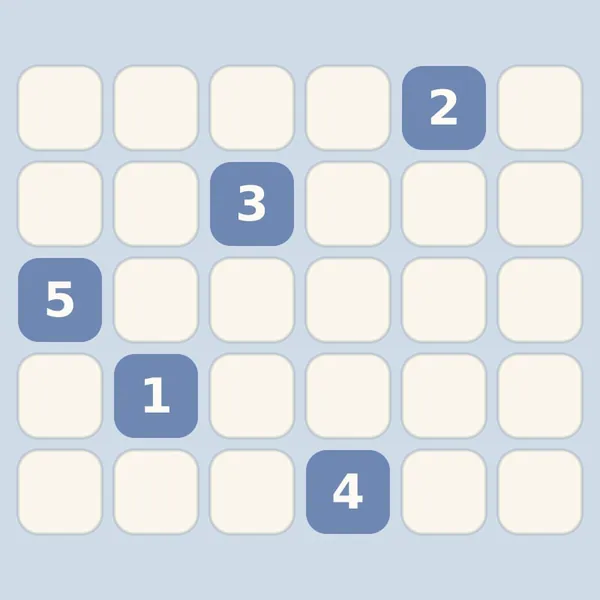
Stop a session when your focus slips. The whole skill is full attention during one brief look, and tired runs mostly teach you to rush. If you'd like to train holding an order rather than a picture, the Chimp Test at /games/chimp-test asks you to remember where numbers sit, then tap them in sequence.