Twelve letters, one chain
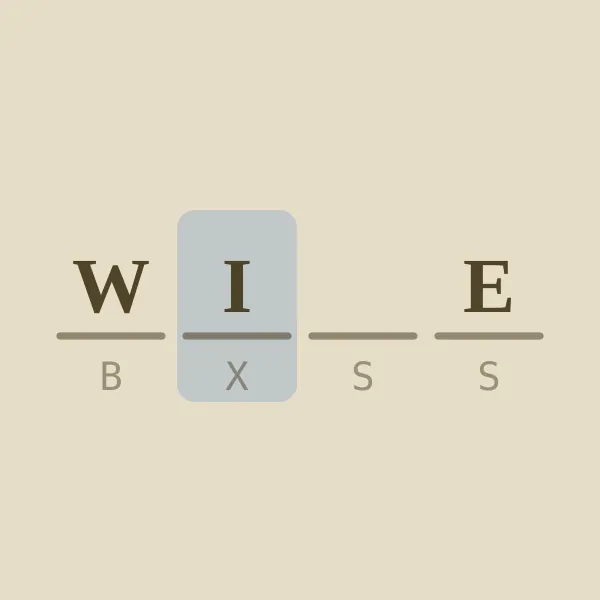
Letter Square sets twelve different letters around a square, three to a side. You spell words by hopping between sides, and each new word must start with the last letter of the one before. The puzzle is done when every letter has been used at least once.
Each puzzle on this site is built around a two-word chain that uses all twelve letters, which is why par is two. That is worth remembering when you feel stuck. A two-word answer exists every time, even if a longer chain is easier to find.
What the side rule really means
The rule that two letters from the same side cannot sit next to each other has a few effects that are easy to miss.
- No double letters, ever. Each letter sits on exactly one side, so a word with a doubled letter, like BALL or COFFEE, can never be played.
- Pairs on one side are locked apart. If A and E share a side, no word can contain AE or EA. That rules out words like READ, EAR and TEAM, however natural they look.
- Vowels matter most. Count the vowels and note where they sit. If two vowels share a side, you will need consonants between them. If one side has no vowel at all, every letter on it needs a vowel from another side next to it.
Before you type anything, spend a moment finding the awkward letters. Rare letters like J, Q, V, W, X and Z, and any side with no vowels, are the ones that will decide your chain.
Planning backwards
The most useful technique is to build the chain from its hard end. Find a word that uses the awkward letters first, then look at the letter it starts with. Your opening word must end on that letter.
Here is a worked example of the thinking. Say the board includes a K, a W and an X, and you spot a word that uses K and W together. It starts with S. Now your first word has to end in S, use as many of the remaining letters as possible, and avoid the X if your second word already covers it. Thinking this way turns twelve loose letters into two smaller searches.
A few more habits help:
- Prefer long words with many different letters. Each new letter you use shrinks the problem. A seven-letter word with seven different letters does far more than a seven-letter word that repeats three of them.
- Watch the last letter. Ending on E, S, T or D usually gives you plenty of next words. Ending on a rare letter can strand you.
- Write down what is left. After each word, list the letters you still need. The next word only has to cover those.
Mistakes that cost you
Submitted words are permanent. Backspace and Escape only edit the word you are still typing. Once you press Enter on a valid word, it stays in your chain, and your next word must start with its last letter. So test a word in your head before you submit it, especially the first one.
Other common slips:
- Chasing a word the board will not accept. The word list is a set of common English words, without names, places or brands. If an unusual word is rejected, try a more everyday one.
- Using up easy letters early. If your first word spends all the common letters, the second word has to carry every rare one. Mix them.
How to improve
There are no difficulty levels. Your measure is the number of words you need. Going over par carries no penalty, so a three- or four-word solve is a fine place to start.
A good learning path:
- First, aim to finish every puzzle, in any number of words.
- Next, aim for three words. This trains you to pick long words with many fresh letters.
- Then aim for par. Two-word solves almost always come from planning backwards from the hard letters.
When a puzzle beats you, press New puzzle and try again. Each one is a different set of letters, so you get fresh practice every time. If you like this kind of letter juggling, Word Hive trains the same instinct for spotting long words inside a small set of letters.